Enterprise AI Governance And Compliance Platform

Centralize AI governance.
Simplify compliance.
Maintain continuous oversight.

FairFuture brings AI inventory, risk, controls, monitoring and evidence into one connected enterprise platform, helping organizations maintain active governance throughout the AI lifecycle and stay ready as requirements evolve.

Now onboarding early-access partners across financial services, government and healthcare.

Representative product experience. Capabilities are being released progressively with early-access partners.

The Problem

Governance by spreadsheet doesn't scale with AI.

Most organizations are managing a growing number of AI systems through email approvals, shared documents and manual reviews, a process that breaks down long before regulators, boards or customers ask hard questions.

What most teams have today

What changes with FairFuture

The Platform

Everything AI governance touches, in one connected system.

FairFuture AI covers the full lifecycle, from the first use-case idea to eventual retirement, so nothing falls through the cracks between teams, tools and reviews.

Intelligent Intake

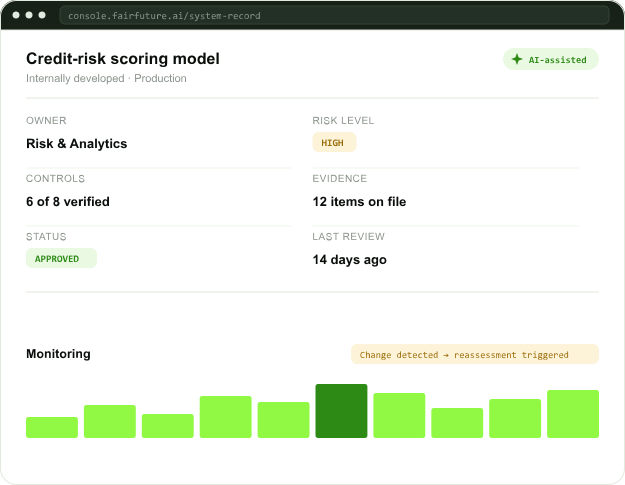
Turn project documents or a plain-language description into a structured AI system record, creating a centralized inventory of internal, third-party and agentic AI.

Risk classification

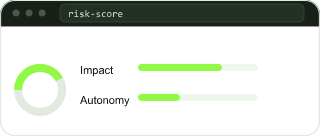
Classify each AI system based on its purpose, context, impact, affected stakeholders, jurisdiction and applicable requirements, with a clear rationale for every result.

Compliance Automation

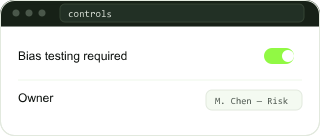
Turn regulations and internal policies into controls, owners, approval paths and automated tasks, so every AI system follows the appropriate governance process.

Continuous Monitoring

Track changes in systems, models, data, vendors, controls and incidents, with alerts when review or action is required.

Evidence & Reporting

Maintain a traceable record of decisions, control completion, monitoring results and exceptions, then generate dashboards, audit reports and regulator-ready packages.

Ready to bring your AI governance together?

See how FairFuture AI gives your team one connected system to manage risk, compliance, monitoring, and evidence across the entire AI lifecycle.

How it Works

From regulation to execution, in five steps.

AI-assisted throughout the governance lifecycle.

Every AI use case moves through the same governed path, so lower-risk work moves quickly while higher-risk work gets the oversight it needs.

01

Intake

Upload project documentation or describe an AI use case. FairFuture creates a proposed system record and identifies missing information.

02

Assess

Classify the system based on its purpose, context and potential impact, then identify applicable policies, regulations and standards.

03

Approve

Assign controls, owners and approval steps while keeping every decision and its rationale on record.

04

Monitor

Track changes in systems, models, data, vendors and controls, with alerts when reassessment or action is required.

05

Report

Generate current dashboards, audit evidence and regulator-ready reports from the information already maintained in the platform.

Dynamic Governance

Governance that keeps pace with the AI it oversees.

FairFuture is designed to keep governance active after approval. Changes to systems, models, data, vendors, controls or requirements can trigger alerts, reassessment and new actions, while people retain full authority and accountability.

“Governance shouldn’t be a periodic exercise while AI moves fast around it. It should evolve at the same speed as the systems it oversees.”

Solutions

Built for regulated environments. Adaptable to every industry.

FairFuture is designed for organizations that need greater visibility, accountability and control over AI. We bring particular focus to government, financial services and healthcare, while supporting enterprise AI governance across industries.

Government & Crown Corporations

Operationalize responsible AI requirements across public programs, services and automated decision-making systems.

Financial Services

Connect AI and model inventories, risk classifications, controls, monitoring and regulatory evidence.

Healthcare

Govern clinical, operational, research and administrative AI with clear ownership, risk-based oversight and traceable evidence.

Enterprise AI Governance

Establish a centralized and consistent governance approach across the organization’s complete AI portfolio.

Why FairFuture

Built for governance that has to operate in practice.

One Connected Platform

Bring AI inventory, risk, controls, monitoring and evidence into one governance environment.

AI-Assisted Workflows

Use AI to accelerate intake, classification, evidence discovery and reporting.

Dynamic Governance

Maintain oversight after approval and respond as systems, risks and requirements change.

Evidence-Ready Compliance

Keep requirements, decisions, controls and supporting evidence connected throughout the AI lifecycle.

Regulations & Standards

One governance program. Multiple regulations and standards.

FairFuture connects internal policies and reusable controls to regulatory requirements across jurisdictions, reducing duplicated work and helping organizations maintain compliance readiness as requirements evolve.

01 - Map Once, Apply Across Frameworks

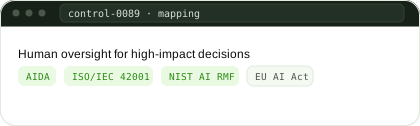
Connect one control or evidence item to every regulation, standard or internal policy it supports.

02 - Stay Current as Requirements Change

Maintain clear mappings and identify where regulatory changes may require new controls, evidence or reassessment.

03 - Evidence, not just intentions

Connect every assessment and control to the evidence needed for management, auditors or regulators.

Insights

Perspective on AI governance and regulation.

Practical thinking from our team on operationalizing AI governance, as the regulatory landscape keeps evolving.

An AI assessment is a decision snapshot, not a permanent verdict. Learn how event-driven governance connects system changes, controls, evidence and reassessment throughout the AI lifecycle.
NIST AI RMF and ISO/IEC 42001 should not be treated as competing checklists. Learn how to use NIST's risk outcomes and ISO's management-system requirements in one evidence-ready AI governance operating model.
The EU AI Act does not assign one label that resolves compliance. Organizations must determine scope, operator role, prohibited-practice status, high-risk status, transparency duties and any general-purpose AI obligations, then connect those conclusions to controls, evidence and ongoing monitoring.